Showing posts with label Bible background. Show all posts

Wednesday, March 4, 2026

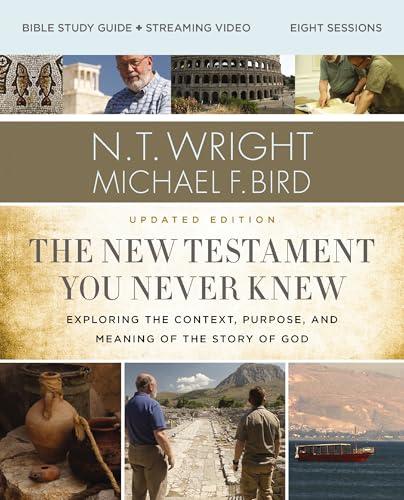
The New Testament You Never Knew Bible Study Guide by N. T. Wright; Michael F. Bird

Book coverThe New Testament You Never Knew Bible Study Guide plus Streaming Video, Updated Edition by N. T. Wright; Michael F. Bird

ISBN-13: 9780310147046
Paperback: 176 pages
Publisher: HarperChristian Resources
Released: Jan. 20, 2026

Source: ebook review copy from the publisher through NetGalley.

Book Description, Modified from NetGalley:
In this eight-session video Bible study, well-known Bible scholars N. T. Wright and Michael F. Bird team up to take you on a tour of the New Testament. You will discover things you never knew about Jesus' baptism and journey in the wilderness, the meaning behind his parables and miracles, the significance of his death and resurrection, the incredible expansion of the early church into the Greco-Roman world, and how the transforming mission of Jesus can still turn the world upside down today. Through reading the New Testament we continually discover that God indeed keeps his promises, but those promises don't always look like what people expect.

This study guide includes individual access to eight streaming video sessions, group discussion questions, Bible exploration, and video teaching notes, and personal study and reflection materials. Sessions and video run times:

The Books of the New Testament (23:00)
The World of Jesus and the Apostles (20:30)
The Life and Death of Jesus (25:30)
The Resurrection of Jesus (24:00)
The Ministry of the Apostle Paul (25:30) The Early Christians and the Church (23:00)
The Mission of the Church (26:00)
The Creation of the New Testament (23:30)


My Review:
The New Testament You Never Knew Bible Study Guide is an 8-week-long study providing an overview of the New Testament. This is an updated version and came with online streaming video. You start each session with the group/video. The video was about 20-25 minutes long and showed Bible locations while Wright and Bird provided commentary on that session's topic. The written study guide started each week with a short intro (your choice of one of two questions to discuss for 15 minutes), then there were spaces to write notes under the main topic headlines given in the video with important bits from the video recapped in sidebars. You then discuss the video for 40 minutes with provided questions for group discussion. You finish with 10 minutes for prayer on various prompted points. For each of the 5 days after the group study, you're provided with related verses to look up and asked 2 questions about those verses. You are also provided with a few paragraphs of application at the end of that session. This study covered:

Session 1 - The Books of the New Testament
Session 2 - The World of Jesus and the Apostles
Session 3 - The Life and Death of Jesus
Session 4 - The Resurrection of Jesus
Session 5 - The Ministry of the Apostle Paul
Session 6 - The Early Christians and the Church
Session 7 - The Mission of the Church
Session 8 - The Creation of the New Testament

While this study generally provided a good overview of the New Testament and how the books of New Testament came to be a part of the New Testament, they made a few claims that I didn't agree with. For example, they said that John the Baptist was baptizing in the Jordan River near Jericho because he wanted people to see his ministry as a new Exodus. Well, Exodus refers to leaving...in this case, leaving Egypt. By the time Joshua lead the Israelites across the Jordan, only a few people were left that had been a part of the Exodus. Crossing the Jordan River was entering the land of covenant promise. Also, John preached in other locations as well. Anyway, the visuals chosen for the video were interesting, especially if you knew what they were showing (as they didn't label where every visual was located).


If you've read this book, what do you think about it? I'd be honored if you wrote your own opinion of the book in the comments.


Friday, February 27, 2026

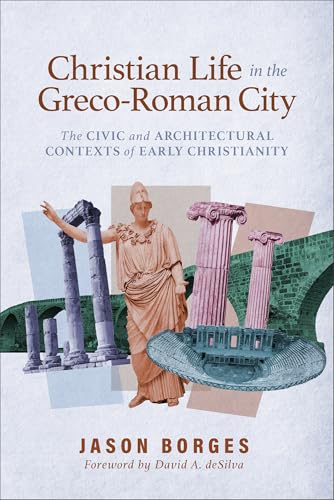
Christian Life in the Greco-Roman City by Jason Borges

Book coverChristian Life in the Greco-Roman City
by Jason Borges


ISBN-13: 9781540968852
Paperback: 240 pages
Publisher: Baker Academic
Released: February 17, 2026

Source: ebook review copy from the publisher through NetGalley.

Book Description, Modified from Goodreads:
From lively agoras to magnificent temples and luxurious baths, civic buildings were more than just physical settings for everyday life; they were spaces imbued with social and political meaning. Informed by Jason Borges's research and his experience leading tours to ancient sites, this book explores how early Christians interacted with and understood their urban environment. The result is fresh insight into the cultural background of the New Testament and other early Christian writings.

Each chapter explains a specific structure (agoras/forums, temples, baths, prisons, theaters, libraries, and cemeteries), provides an extant example, and discusses its significance for reading the New Testament. The book includes black and white images, informative diagrams, and a foreword by David A. deSilva. This helpful book illuminates the architectural and civic background of the New Testament and early Christianity so that readers can better understand the writings and theology of early Christians.


My Review:
Christian Life in the Greco-Roman City is Bible background book which explains how understanding the public spaces that New Testament events occurred in can bring insight into NT writings. For example, an agora might be translated as "marketplace" in our Bible, but it was so much more than we'd envision from the word "marketplace." Knowing what activities happened in an agora and how people interacted in these spaces helps readers to better understand references to these spaces in the NT.

The author spent a chapter on each of the following environments: agoras/forums, temples, baths, prisons, theaters, libraries, and cemeteries. He explained what they looked like (both the ideal and an example from archeology), what activities were done there and how people interacted there (using writings from the time), and then examined references to these spaces (or activities done there) in the New Testament. He showed how the original audience would have understood the passages, either adding nuance or showing how we may have misunderstood the main intent of the passage. The writing style was easily understandable and interesting, not highly academic. Overall, I'd highly recommend this interesting book to those intrigued by the subject.


If you've read this book, what do you think about it? I'd be honored if you wrote your own opinion of the book in the comments.

Tuesday, October 7, 2025

The Wonders of the First Christmas by Andy McGuire

Book cover
The Wonders of the First Christmas
by Andy McGuire


ISBN-13: 9780310170211
Hardcover: 32 pages
Publisher: Zonderkidz
Released: October 7, 2025

Source: ebook review copy from the publisher through NetGalley.

Book Description, Modified from Goodreads:
The Christmas story is so familiar that we often take the details for granted. But did Mary and Joseph really ride on a donkey to Bethlehem? What was a manger and why did they use one for Jesus’s bed? And where were the wise men actually from? By approaching the story with historical insight and a child’s sense of wonder, Andy McGuire crafts a tale that feels fresh and insightful, using well-researched material and beautiful original artwork.

The Wonders of the First Christmas combines the gospel text of the nativity story with historical and geographic facts about ancient Israel and the life and times of Jesus. It gives children a solid foundation for their faith with beautiful art and additional content. For children ages 4 and up, it includes an easy-to-read main story as well as callouts with easy-to-understand facts.


My Review:
The Wonders of the First Christmas is a Christian book about Christmas for ages 4 and up. The illustrations were in a very realistic style and showed historically accurate visuals for the story. The main text recounts the birth of Jesus as described in the Bible, from Mary being visited by an angel until Jesus' family returns from Egypt after Herod's death. There were also boxes with a paragraph or two of historical information that expanded upon the main text, and this would be of more interest to maybe 7 year-olds and up. These boxes provided more information on carpenters, Rome, donkeys, inns, swaddling clothes, shepherds, sheep, angels, mangers, wise men, prophecy about Jesus' birth, myrrh and frankincense, camels, and Egypt. Overall, I think this would be of most interest to kids who have grown up hearing the basic Christmas story but are old enough to like learning more background information. I'd recommend this well-written and illustrated book.


If you've read this book, what do you think about it? I'd be honored if you wrote your own opinion of the book in the comments.


Friday, August 12, 2022

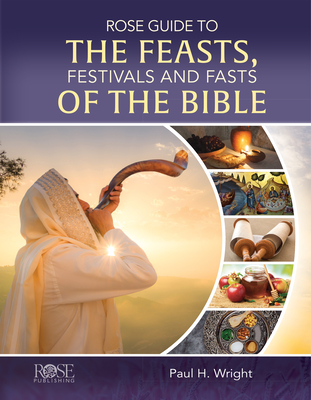
Rose Guide to the Feasts, Festivals and Fasts of the Bible by Paul H. Wright

Book cover
Rose Guide to the Feasts, Festivals and Fasts of the Bible
by Paul H. Wright


ISBN-13: 9781649380210
Hardcover: 232 pages
Publisher: Rose Publishing
Released: July 15, 2022

Source: ebook review copy from the publisher through NetGalley.

Book Description, Modified from NetGalley:
Passover. Yom Kippur. Feast of Tabernacles. Rosh Hashanah. With all the ceremonies, festivals, and observances in the Bible, it’s hard to keep track of them all and remember why they’re important to our faith! But what if you could distill all this key information across dozens of chapters of the Bible into one solid, easy-to-read handbook with images, charts, and diagrams? It’s never been easier to get an expert look at the traditions, fasts, and feasts of the Bible: with this guide, 5 leading authorities on biblical celebrations and disciplines will help condense their research and historical knowledge into key takeaways that you can learn quickly and easily:

Solid overviews of the feasts, celebrations, and rituals kept in ancient Israel and the Old Testament

Historical background of the feasts and holy days in the centuries leading up to the New Testament

Summary of modern-day traditions kept by Jews today

Key takeaways of how messianic communities observe biblical feasts and holidays today

Presentation of how non-messianic Christian congregations have adopted the feasts into liturgies, theologies, etc.

God commanded Moses and the children of Israel to observe feasts and holy days as memorials to the great things that he had done in their lives. With expert research, clearly understand how these times of celebration are important to help us better see God’s complete picture and plan of redemption.


My Review:
This book looks at the regular fasts and feasts in the Old Testament period, in the New Testament Period, of modern Jews, of Messianic Jews, and of Christians. For the Old and New Testament sections, the authors explored how the pilgrim feasts were supposed to be celebrated and what the biblical evidence is for how the feasts were actually celebrated throughout the Bible (and if there were times when they weren't celebrated at all). They provided the context of the feasts and fasts: why they were celebrated, how they fit into a largely agricultural society, and how Israel was similar to and different from their neighbors. They talked about both feasts in general and the annual feasts. There were references to specific events in the Bible, to comments made in writings by others at that time, and to finds in archaeology. The book included some charts and pictures of things like the different foods mentioned in the feasts or a table set up for a modern Passover. Overall, I'd recommend this informative book.

The first chapters talked about: Sabbath, New Moon, Rosh Hashanah (New Year's Day), Yom Kippur (Day of Atonement), Passover (Feast of Unleavened Bread), Shavuot (Feast of Weeks), and Sukkot (Feast of Booths), Purim, Hanukkah, and days of Fasting, and other holidays. Messianic perspective was given on the Sabbath, Passover and the Feast of Unleavened Bread, First Fruits, Feast of Weeks/Pentecost, Day of Trumpets, Day of Atonement, Feast of Booths, Purim, Hanukkah. He also explained how the Spring feasts were fulfilled by Yeshua and the Fall feasts will be fulfilled in the future. He also talked about how Jesus celebrated these feasts in the New Testament. The Christian perspective covered how the early church celebrated these holidays and how that changed with time: Sabbath and Sunday, Passover and Good Friday and Resurrection Sunday, Pentecost, Advent, Holy Cross Day, Thanksgiving Day, Christmas and Epiphany.


If you've read this book, what do you think about it? I'd be honored if you wrote your own opinion of the book in the comments.

Excerpt: Read an excerpt using Google Preview.

Thursday, February 17, 2022

Stone and Dung, Oil and Spit by Jodi Magness

Book cover
Stone and Dung, Oil and Spit
by Jodi Magness


ISBN-13: 9780802865588
Paperback: 375 pages
Publisher: Eerdmans
Released: April 12th 2011

Source: Bought.

Book Description, Modified from Goodreads:
In Stone and Dung, Oil and Spit Jodi Magness unearths “footprints” buried in both archaeological and literary evidence to shed new light on Jewish daily life in Palestine from the mid-first century b.c.e. to 70 c.e. — the time and place of Jesus’ life and ministry.

Magness analyzes recent archaeological discoveries from such sites as Qumran and Masada together with a host of period texts, including the New Testament, the works of Josephus, and rabbinic teachings. Layering all these sources together, she reconstructs in detail a fascinating variety of everyday activities — dining customs, Sabbath observance, fasting, toilet habits, burial customs, and more.


My Review:
Stone and Dung, Oil and Spit discussed Jewish purity issues from the time of Jesus. The author looked at various literary sources from that time (including the Bible and Qumran texts) and compared this to what has been found through archaeology. Were certain rulings by rabbis followed by the general population? The author treated the Bible as just another text from the time period, though she wasn't disrespectful. She focused a lot on the Qumran community, both literary texts and archaeological discoveries. This book was academic in tone but easy enough to follow. There were some pictures at the center of the book illustrating some of the archaeological finds that she talked about. While I did learn some interesting things, it has a rather narrow focus on Jewish purity.


If you've read this book, what do you think about it? I'd be honored if you wrote your own opinion of the book in the comments.


Excerpt: Read an excerpt using Google Preview.

Monday, May 17, 2021

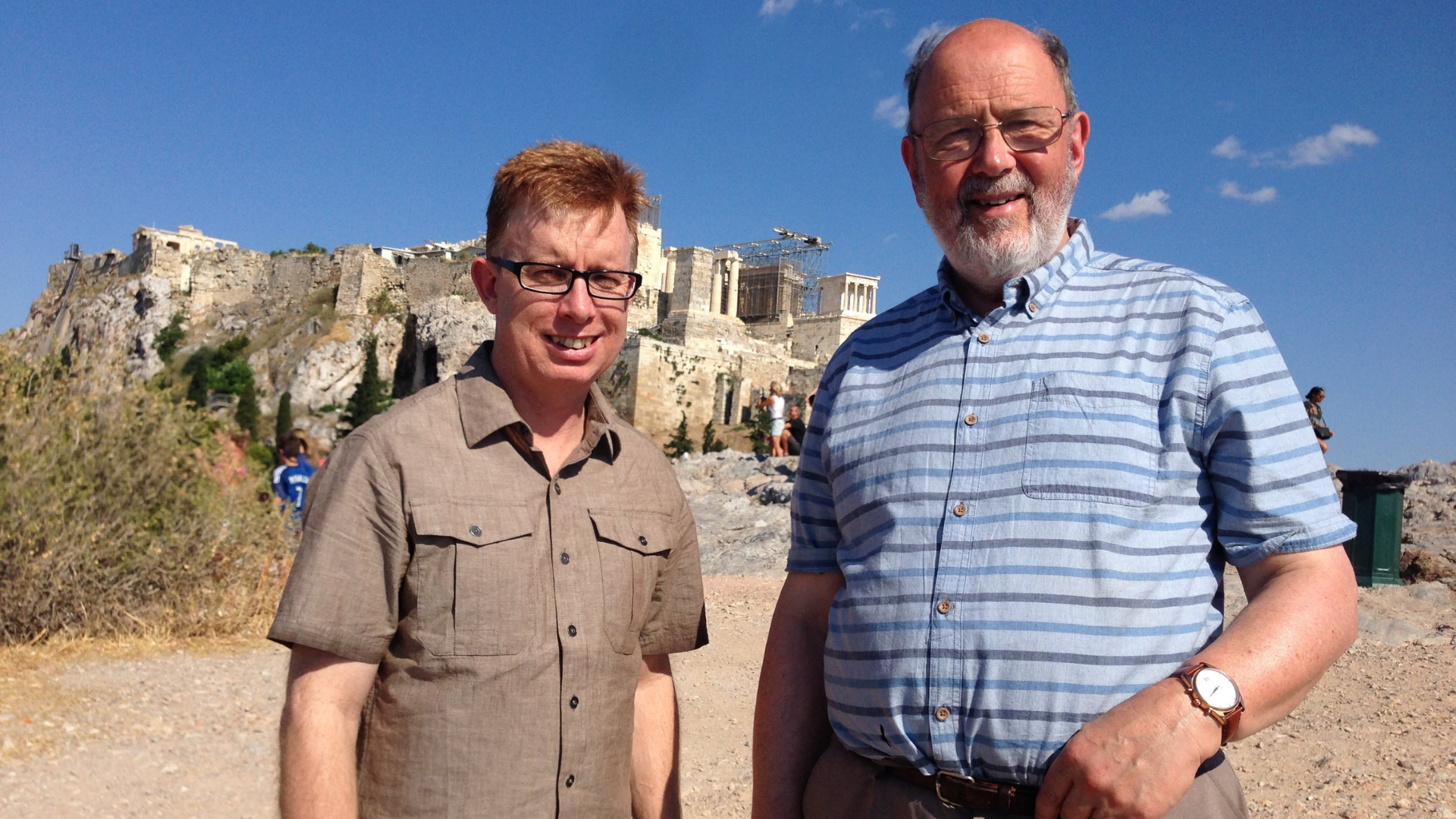
The New Testament in Its World by N. T. Wright and Michael F. Bird

Book cover
The New Testament in Its World
with N. T. Wright and Michael F. Bird


MasterLectures Video
Publisher: Zondervan Academic
Source: Free month offer from MasterLectures.

Video Series Description:
Enter the world of the New Testament. A companion to The New Testament in Its World by N. T. Wright and Michael F. Bird, these lectures serve as your passageway from the twenty-first century to the era of Jesus and the first Christians.

Professors Wright and Bird will guide you through how to read the New Testament, the world of Jesus and the early church, deep studies on both Jesus and the apostle Paul, lectures on every book of the New Testament, as well as how to live the story of the New Testament today.

In addition to numerous studio lectures, on-location sessions will immerse you into the world of the New Testament. Filmed around the world, this series takes you on a journey with Wright and Bird to Jerusalem, Corinth, Athens, Rome, Nazareth, Qumran, Capernaum, and the shores of the Sea of Galilee.

At nearly 13 hours of content, these lectures are the definitive video introduction to the history, literature, and theology of the New Testament.

Watch the Trailer.


My Review:
Length: Around 14 hours of video when including the bonus material.

The New Testament in Its World is a video study about the books of the New Testament. The series was so long that I was not able to complete it before the end of my free trial period. I enjoyed sessions 5 through 15, which gave cultural background and context to the New Testament and the early church. The later sessions focused on specific books of the Bible and tended to focus more on the debates about who wrote the book, who it was sent to, etc. They also summarized the major ideas in the books and suggested applications. Both authors apparently wanted to talk about each book and each summarized the book, so some of it was repeated information.

Some of these sessions were filmed on-location or included brief video clips of the cities where the letter was written or was sent. While the cultural background information was potentially interesting for anyone, I felt like the debated information was much more academic than most people would care about.

Introduction - Welcome to the Study
Session 1 - Beginning Study of the New Testament
Session 2 - The New Testament as History
Session 3 - The New Testament as Literature
Session 4 - The New Testament as Theology
Session 5 - The History of the Jews
Session 6- Jewish Context of Jesus, Early Church
Session 7 - Greco-Roman Context of Early Church
Session 8 - The Study of the Historical Jesus
Session 9 - The Profile and Praxis of a Prophet
Session 10 - Who Did Jesus Think He Was?
Session 11 - The Death of the Messiah
Session 12 - Afterlife for Greek, Roman, Jew
Session 13 - Story of Easter (Apostle Paul)
Session 14 - Story of Easter (the Evangelists)
Session 15 - Story of Paul's Life and Ministry
Session 16 - A Primer on Pauline Theology
Session 17 - Galatians
Session 18 - 1 and 2 Thessalonians
Session 19 - Philippians
Session 20 - Colossians, Philemon, Ephesians
Session 21 - 1 and 2 Corinthians
Session 22 - Romans
Session 23 - The Pastoral Epistles
Session 24 - The Gospel according to Mark
Session 25 - The Gospel according to Matthew
Session 26- Gospel of Luke, Acts of the Apostles
Session 27 - The Gospel according to John
Session 28 - The Making of the Gospels
Session 29 - Intro to Early Christian Letters
Session 30 - The Letter to the Hebrews
Session 31 - Letters by Jesus's Brothers
Session 32 - Petrine Letters: 1 and 2 Peter
Session 33 - Johannine Letters: 1, 2, 3 John
Session 34 - Revelation
Session 35- Intro to Textual Criticism of the NT
Session 36 - Canonization of the New Testament
Session 37 - Bringing It All Together
BONUS: What Are "Principalities" in the Bible?
BONUS: Why Study the Historical Jesus?
BONUS: What Is Prayer?
BONUS: How Did Jesus View His Vocation?
BONUS: What Paul Means by "Faith"
BONUS: The Persecution of Christians
BONUS: Why Does Resurrection Matter?
BONUS: How to Understand the Holy Spirit
BONUS: How the Gospel Is Different from Ancient Religion
BONUS: The End of Exile: Daniel, Jesus, and Redemption


If you've read this book, what do you think about it? I'd be honored if you wrote your own opinion of the book in the comments.

Monday, May 10, 2021

How to Read the Bible for All Its Worth with Douglas Stuart and Mark Strauss

Book cover
How to Read the Bible for All Its Worth
with Douglas Stuart and Mark Strauss


MasterLectures Video
Publisher: Zondervan Academic
Source: Free month offer from MasterLectures.

Video Series Description:
Understanding the Bible isn't for the few, the gifted, the scholarly. It's for everyone. the Bible is meant to be read and comprehended by everyone from armchair readers to seminary students. A few essential insights into the Bible can clear up a lot of misconceptions and help disciples of all kinds grasp the meaning of Scripture and its application to your twenty-first century life.

How to Read the Bible for All Its Worth, taught by scholars and professors Mark Strauss and Douglas Stuart, covers everything from translation concerns to different genres of biblical writing. In clear, simple language, sessions will help you accurately understand the different parts of the Bible and their implications for both ancient audiences and humanity today, so you can uncover the inexhaustible worth that is in God's Word.

By completing this series, you will gain greater familiarity with and appreciation for the Bible as a whole, insight into the ten basic genres in the Bible and how to correctly interpret each, and a deeper understanding of how to apply God’s Word to your own life today.


My Review:
Each episode was 21-29 minutes long.

How to Read the Bible for All Its Worth is a video series that explains how to understand and interpret the different genre of the Bible (narrative, poetry, wisdom, prophetic, etc.). I've read a similar book in the past and found it helpful, and this series covered much of the same information. It was a good review. It's for laymen level, so the speakers were easy to listen to and understand. Overall, I'd recommend this series.

Session 1 - The Need to Interpret
Session 2 - A Good Translation
Session 3 - Epistles: Think Context
Session 4 - Epistles: Hermeneutics
Session 5 - Old Testament Narratives
Session 6 - Acts: Historical Precedent
Session 7 - Gospels: Many Dimensions
Session 8- Parables: You Get the Point?
Session 9 - Law: Covenant Stipulations
Session 10- Prophets: Enforcers
Session 11 - The Psalms: Prayers
Session 12 - Wisdom: Then and Now
Session 13- Revelation: Judgment & Hope


If you've read this book, what do you think about it? I'd be honored if you wrote your own opinion of the book in the comments.


Monday, May 3, 2021

EPIC: An Around-the-World Journey through Christian History by Tim Challies

Book cover
EPIC: An Around-the-World Journey through Christian History
by Tim Challies


MasterLectures Video
Publisher: Zondervan Academic
Source: Free month offer from MasterLectures.

Video Series Description:
The Epic documentary series takes you on a journey with Tim Challies to twenty-four countries, visiting dozens of museums, cemeteries, libraries, houses, monuments, and more. From pulpits to paintings, the labor of monks to the martyrdom of missionaries. Through thirty-three carefully selected objects, author and pastor Tim Challies introduces learners to the history of Christianity in a unique and creative way. It's a story that tells us what God is accomplishing in this world, whether through princes or peasants, triumph or trial.

Watch the Trailer.


My Review:
EPIC is a travelogue video series looking for historical objects around the world that tell the story of Christianity. Each episode is 25 minutes long. The host went to museums, historical sites, churches, etc. Sometimes he was allowed to film inside, showing the object that he talked about, while other times he simply described what he had seen while standing outside of the museum. He explained how the object told an important part of Christian history. There were also scenes showing him traveling, eating, taking photographs, etc. Sometimes the video was jerky, which I find difficult to watch. I enjoyed seeing the video of some of the sites in Germany and India that I've never seen pictures or video of before.

Episode 1 - Israel & Italy
Episode 2 - England
Episode 3 - Ireland & Scotland
Episode 4 - France & Switzerland
Episode 5 - Germany & Ecuador
Episode 6 - Australia & New Zealand
Episode 7 - Zambia & Zimbabwe
Episode 8 - India
Episode 9 - China, Philippines & South Korea
Episode 10 - USA


If you've watched this video series, what do you think about it? I'd be honored if you wrote your own opinion of the series in the comments.


Monday, April 26, 2021

The New Testament in Antiquity with Gary M. Burge and Gene L. Green

Book cover
The New Testament in Antiquity
with Gary M. Burge and Gene L. Green


MasterLectures Video
Publisher: Zondervan Academic
Source: Free month offer from MasterLectures.

Video Series Description:
The New Testament in Antiquity skillfully develops how Jewish, Hellenistic, and Roman cultures formed the essential environment in which the New Testament authors wrote their books and letters. Throughout the video lectures, presenters Gary Burge and Gene Green provide windows into the first-century world and discuss issues of interpretation derived from cultural observations. You will learn how understanding the land, history, and culture of this world brings remarkable new insights into how we read the New Testament itself.


My Review:
The total series takes nearly 9 hours to watch.

The New Testament in Antiquity is a video series about the cultural background to the New Testament. The speakers provided information about the cities (Corinth, etc.) and cultures (Jewish, Roman, etc.) being addressed in the various letters, providing insights to Biblical text. They also provided commentary on who wrote the book, to whom it was sent, and summarized the main points of the letter or book. There were brief snippets of video taken on location at the modern ruins of some of the mentioned cities. The speakers were easy to listen to and understand. Overall, I'd recommend this series.

Session 1 - Studying the New Testament
Session 2 - The Historical Setting of the New Testament
Session 3 - The World of Jesus in His Jewish Homeland
Session 4 - The Mediterranean World of the Apostle Paul
Session 5 - Sources for the Story of Jesus
Session 6 - The Story of Jesus
Session 7 - The Teachings of Jesus
Session 8 - The Gospel According to Matthew
Session 9 - The Gospel According to Mark
Session 10 - The Gospel According to Luke
Session 11 - The Gospel According to John
Session 12 - The Acts of the Apostles
Session 13 - Paul of Tarsus: Life and Teachings
Session 14 - The Letter to the Galatians
Session 15 - 1 and 2 Thessalonians
Session 16 - 1 Corinthians
Session 17 - 2 Corinthians
Session 18 - The Letter to the Romans
Session 19 - Colossians and Ephesians
Session 20 - Philippians and Philemon
Session 21 - The Pastoral Letters: 1 Timothy, 2 Timothy, Titus
Session 22 - The Letter to the Hebrews
Session 23 - The Letter of James
Session 24 - 1 and 2 Peter and Jude
Session 25 - The Letters of John
Session 26 - The Revelation of John
Session 27 - Preservation and Communication of the NT


If you've seen this video series, what do you think about it? I'd be honored if you wrote your own opinion in the comments.


Monday, April 19, 2021

Encountering the Holy Land by Carl Rasmussen

Book cover
Encountering the Holy Land
by Carl Rasmussen


MasterLectures Video
Publisher: Zondervan Academic
Source: Free month offer from MasterLectures.

Video Series Description:
Encountering the Holy Land: A Video Introduction to the History and Geography of the Bible is a unique, on-location visual overview of the lands of the Bible designed for students, Bible study groups, adult learners, travelers to the lands of the Bible, pastors, teachers, and all lovers of the Bible. Viewers will develop a deeper appreciation for the Bible by understanding the land and culture in which it was written.

The first lesson introduces the "playing board" of biblical history, followed by lessons arranged historically that begin with the Patriarchs and trace the historical progression of the Old and New Testaments. The video study provides an engaging, accurate, and faithful companion to God's Word--illuminating the text with footage filmed in the Holy Land and Egypt. This set of lessons provides an in-depth visual overview that will help viewers experience the geography and history of Scripture with unprecedented immediacy and clarity.

Throughout Encountering the Holy Land, scholar Carl Rasmussen leads viewers through the Holy Lands to illuminate the geographical and historical context of biblical events. Destined to become a favorite guide to biblical geography for students of the Bible, this accessible set of video lessons will invite you into the world of the Bible as never before.


My Review:
The total series takes about 4 hours to watch.

Encountering the Holy Land is a video Bible study series on how understanding the geology of the Holy Land can bring insights into the actions taken by people in the Bible. The speaker was filmed on location at various locations being described in the series and there were also videos of the geography of other places that he referred to when explaining the history given in the Bible. For example, he described why a battle took place in a certain spot or why the trade routes went through certain areas and not others. Though I have been to Israel, I enjoyed seeing the videos of the various areas and gaining insights to the Bible narrative. He took an "earlier date" view of aligning Egyptian and biblical history (making the first Hyksos king the one that didn't know Joseph), though he did explain other views. (Personally, I think the Hyksos came right after the Exodus.) The speaker was easy to listen to and understand. Overall, I'd recommend this series.

Session 1 - Introduction to the Middle East
Session 2 - Patriarchs and the Egyptian Sojourn
Session 3 - Exodus and Conquest
Session 4 - Settlement in the Land of Canaan
Session 5 - Transition to Monarchy: Samuel and Saul
Session 6 - The United Monarchy: David and Solomon
Session 7 - The Divided Kingdom and Judah Alone
Session 8 - Exile and Return
Session 9 - Greeks, Hasmoneans, and Roman Rule
Session 10 - The Life of Christ
Session 11 - Church Expansion and Paul's Journeys
Session 12 - The Seven Churches of Revelation
Session 13 - Jerusalem and Historical Geography


If you've read this book, what do you think about it? I'd be honored if you wrote your own opinion of the book in the comments.

Monday, November 23, 2020

Christ in the Sabbath by Rich Robinson

book cover
Christ in the Sabbath
by Rich Robinson


ISBN-13: 9780802411990
Paperback: 272 pages
Publisher: Moody Publishers
Released: May 1st 2014

Source: Review copy from the publisher through Amazon Vine.

Book Description from Goodreads:
Christ in the Sabbath will take you on a “Sabbath tour” of the Bible. You’ll explore the themes of Shabbat (Hebrew for "Sabbath") and rest in both Old and New Testament and then discover what it has meant to Jews and Christians for centuries. Rabbinical comments and a variety of traditions provide clarity and credibility to the study of Sabbath.

This volume does not resolve all the differences among Christians concerning the place of the Sabbath today; instead, the journey undertaken in this book is designed to help you form your own conclusions—or inspire you to continue exploring the meaning and significance behind the Sabbath.


My Review:
Christ in the Sabbath explores the origins and practice of the Sabbath in the Bible and afterward. This book was written by a Jewish believer in Jesus, so we get both the Jewish and Christian perspectives. The author started by looking at the origins of Sabbath in the Bible, what it meant, and how it was celebrated (or not). He also looked at special sabbaths, the sabbatical year, and the year of Jubilee. He talked about what things were forbidden on the Sabbath and how this list developed over time. He talked about how Sabbath was celebrated at the time of Jesus and how Jesus is Lord of the Sabbath. He explored the history of Christians worshiping on Sunday and if those in the New Testament period and early church saw this as a new Sabbath. He talked about how Sabbath is celebrated today by Jews, the different views among Christians about Sabbath, and how Christians might celebrate Sabbath. This book contained a lot of information, but it was very readable and easy to understand. Overall, I'd recommend this book to anyone interested in learning more about the history and practice of the Sabbath.


If you've read this book, what do you think about it? I'd be honored if you wrote your own opinion of the book in the comments.

Excerpt: Read an excerpt using Google Preview.

Thursday, November 12, 2020

Misreading Scripture with Individualist Eyes by E. Randolph Richards; Richard James

book cover
Misreading Scripture with Individualist Eyes
by E. Randolph Richards;
Richard James


ISBN-13: 9780830852758
Paperback: 304 pages
Publisher: IVP Academic
Released: October 13th 2020

Source: Ebook review copy of this book from the publisher through NetGalley.

Book Description from Goodreads:
The Bible was written within collectivist cultures. When Westerners, immersed in individualism, read the Bible, it's easy to misinterpret important elements--or miss them altogether. In any culture, the most important things usually go without being said. So to read Scripture well we benefit when we uncover the unspoken social structures and values of its world. We need to recalibrate our vision.

Combining the expertise of a biblical scholar and a missionary practitioner, Misreading Scripture with Individualist Eyes is an essential guidebook to the cultural background of the Bible and how it should inform our reading. E. Randolph Richards and Richard James explore deep social structures of the ancient Mediterranean--kinship, patronage, and brokerage--along with their key social tools--honor, shame, and boundaries--that the biblical authors lived in and lie below the surface of each text. From Abraham, Sarah, and Hagar to Peter's instructions to elders, the authors strip away individualist assumptions and bring the world of the biblical writers to life. Expanding on the popular Misreading Scripture with Western Eyes, this book makes clear how understanding collectivism will help us better understand the Bible, which in turn will help us live more faithfully in an increasingly globalized world.


My Review:
Misreading Scripture with Individualist Eyes looks at the cultural background of the Bible in order to better understand what's happening in the Bible. The authors focused on the differences between individualist and collectivist cultures, specifically on kinship, patronage, brokerage, honor, shaming, and boundaries. They used modern and ancient examples to help explain a concept then showed how this shows up in the Bible. They showed how understanding these cultural differences can change how we view what's going on in some biblical accounts or even what the main point being made is. I've read a lot of these cultural background books yet I still learned a lot. I felt that the authors explained the concepts well. Overall, I'd highly recommend this book to anyone interested in a deeper understanding of the Bible.


If you've read this book, what do you think about it? I'd be honored if you wrote your own opinion of the book in the comments.


Excerpt: Read an excerpt using Google Preview.

Monday, June 8, 2020

A Week In the Life of Ephesus by David A. deSilva

book cover
A Week In the Life of Ephesus
by David A. deSilva


ISBN-13: 9780830824854
Paperback: 208 pages
Publisher: IVP Academic
Released: June 9th 2020

Source: ebook review copy from the publisher through NetGalley.

Book Description, Modified from Goodreads:
As the city of Ephesus prepares for a religious festival in honor of the emperor Domitian, a Christian landowner feels increasing pressure from the city's leaders to participate. Can he perform his civic duties and remain faithful to his Lord? Or has the time come for a costly choice? In this historical novel, biblical scholar David deSilva brings to life such compelling struggles faced by the early Christians. Their insistence on the absolute lordship of their own singular deity brought them into conflict not only with the myriad religious cults of the day, but with all the crushing power of the empire itself.


My Review:
A Week In the Life of Ephesus is partly fiction and partly nonfiction. It read like a documentary show that's primarily made up of fictional reenactments to illustrate the points. The purpose was to educate readers (in an entertaining way) about the social and cultural background of the Christians that received Revelation so that we can better understand how it would have impacted them. A lot of educational material was worked into the story, but additional information was provided in "sidebars" (which could take up whole pages) that were placed within the story. The book included some pictures of archaeological ruins or artifacts that illustrated information in the non-fiction sidebars or events in the story.

The story followed several viewpoint characters but had two main storylines: an upper-class Christian in Ephesus was being pressured to worship the emperor and other gods in addition to the Christian God and a Christian merchant was offered an opportunity to sell goods to Rome at a large profit but at the cost of others lacking those goods. The author was trying to show the different ways various Christians in Ephesus were dealing with pressures to conform and look out for self interest over following Christ wholeheartedly. Overall, I'd recommend this book to people interested in the insights gained from cultural background information.


If you've read this book, what do you think about it? I'd be honored if you wrote your own opinion of the book in the comments.


Wednesday, May 27, 2020

Uncovering the Mysterious Woolly Mammoth by Michael & Beverly Oard

book cover
Uncovering the Mysterious Woolly Mammoth: Life at the End of the Great Ice Age
by Michael Oard,
Beverly Oard


ISBN-13: 9780890515082
Hardcover: 72 pages
Publisher: Master Books
Released: June 1st 2007

Source: Bought it.

Book Description, Modified from Amazon:
How did the Ice Age end? How did men survive during the end of the Ice Age? Where have mammoths been found? Discover the science behind the Ice Age World. The questions of what happened at the end of the Ice Age and why the woolly mammoth disappeared have been asked by many. Unfortunately, the answers given are usually in line with an evolutionary world view. Author Michael Oard gives biblically and scientifically sound answers to these relevant questions for young readers in an exciting story of one boy and his family. Follow Tungus and his tribe as they travel to a better climate away from the dust storms at the end of the great Ice Age. Learn how people lived, the challenges they faced in daily life, and why the woolly mammoths disappeared while the Ice Age was ending.


My Review:
Uncovering the Mysterious Woolly Mammoth is a look from the biblical perspective at the causes of the Ice Age and what we know about how people lived during that time and what happened to the woolly mammoths. Much of this is written in a fictional account from the viewpoint of a 12-year-old boy living in what is now Germany and a 12-year-old boy who migrated with his family from Siberia. We see how they live now and the two tribes talked about how things changed in Siberia. Both the story and the nonfiction scientific explanation after it seemed aimed at 10- to 12-year-olds (and older).

The nonfiction section explained how the worldwide flood described in the Bible would create the correct conditions to cause an ice age and dust storms, the evidence of which we see still today on the landscape. The authors also talked about the mass extinctions of large animals around this time with a focus on the extinction of the woolly mammoth. The illustrations showed scenes from the story and had a realistic (though somewhat blurred) look. Overall, I'd recommend this book to those who want an overview of the science and archaeology of the Ice Age from a biblical perspective.


If you've read this book, what do you think about it? I'd be honored if you wrote your own opinion of the book in the comments.


Excerpt: Read an excerpt using Google Preview.

Monday, April 27, 2020

The True Story of Noah's Ark by Tom Dooley

book cover
The True Story of Noah's Ark
by Tom Dooley,
Bill Looney (Illustrator)


ISBN-13: 9780890513880
Hardcover: 72pages
Publisher: New Leaf Publishing Group
Released: June 1st 2003

Source: Bought.

Book Description, Modified from Goodreads:
God always has a plan; God always has a man. The plan: destroy the wickedness of the world. The man: Noah. How would you feel if you knew that God was going to destroy the world, and you had been chosen out of millions of people to continue the human race? This book is not just Sunday school material for kids, but the thrilling adventure of Noah comes to life through the dazzling, detailed illustrations and the exciting True Story of Noah s Ark. The images of the interior of Noah s ark are like nothing you ve ever seen before. The people and cities depicted here are certainly more advanced than what you ve been led to believe - these people weren t cavemen! They invented metals and musical instruments; they were skilled craftsmen; they built grand cities -all before the Flood. And this is not fiction - it s all biblically and historically based.


My Review:
The True Story of Noah's Ark is a children's hardback book about life before the Flood and the making of Noah's Ark. There were colorful illustrations along with text explaining what life would've been like before and during the Flood. The author used the information included in the Bible and then filled in some information based on reasonable speculation. Overall, I'd recommend this to any Christian who wants to have a children's book about this event as this book is more accurate than most and gives an accurate idea of how big the ark really was.


If you've read this book, what do you think about it? I'd be honored if you wrote your own opinion of the book in the comments.


Excerpt: Read an excerpt using Google Preview.

Tuesday, February 4, 2020

Eyewitness to Crucifixion by Stephen M. Miller

book cover
Eyewitness to Crucifixion
by Stephen M. Miller


ISBN-13: 9781640700017
Paperback: 192 pages
Publisher: Discovery House
Released: February 4th 2020

Source: ebook review copy from the publisher through NetGalley.

Book Description, Modified from Goodreads:
Stephen M. Miller has a journalistic approach to explaining Bible knowledge. Now Miller has set his sights on crucifixion, gathering firsthand testimony from ancient witnesses to discover, What does it really mean that Jesus was executed on a Roman cross? You’ll examine the historical context for your faith as seen through first-century eyes.


My Review:
Eyewitness to Crucifixion is a collection of quotes from historical documents about crucifixion. The author used casual language when discussing the information and translated the quotes into everyday English. He included any mention of crucifixion, even if it was just in passing. The author discussed what led up to and came after the quote so that it was in context, and he also gave a brief biography about the life of the author of the quote. Some of the quotes described crucifixion rather than just commented on who was crucified, and those could get gory. The author also talked about how critics think that little about Jesus's crucifixion is actually described and how our images of his crucifixion may be wrong.

He included a section of quotes written after Jesus death which referred to crucifixion, usually a description of how the early Christians were killed during persecution. This also got gory. The author talked about what early Christians said about Jesus's crucifixion and what outside sources said. This involved a lot of discussion about what the critics say to discredit some of these quotes. He finished by talking about what the Bible actually does say about Jesus crucifixion, and then he talked about some of the comments he has gotten on his YouTube video on this topic. Overall, despite the casual tone, this really is more in-depth and academic than would interest the casual Christian. But if you really want to know this information, here it is.


If you've read this book, what do you think about it? I'd be honored if you wrote your own opinion of the book in the comments.


Tuesday, December 3, 2019

A Week in the Life of a Greco-Roman Woman by Holly Beers

book cover
A Week in the Life of a Greco-Roman Woman
by Holly Beers


ISBN-13: 9780830824847
Paperback: 176 pages
Publisher: IVP Academic
Released: December 3, 2019

Source: ebook review copy from the publisher through NetGalley.

Book Description, Modified from Goodreads:
In first-century Ephesus, life is not easy for women. A young wife meets her daily struggles with equanimity and courage. She holds poverty and hunger at bay, fights to keep her child healthy and strong, and navigates the unpredictability of her husband's temperament. But into the midst of her daily fears and worries, a new hope appears: a teaching that challenges her society's most basic assumption. What is this new teaching? And what will it demand of her? In this novel, Holly Beers introduces us to the first-century setting where the apostle Paul first proclaimed the gospel. Illuminated by historical images and explanatory sidebars, this lively story not only shows us the rich tapestry of life in a thriving Greco-Roman city, it also foregrounds the interior life of one courageous woman--and the radical new freedom the gospel promised her.


My Review:
A Week in the Life of a Greco-Roman Woman is partly fiction and partly nonfiction and covered events from the point of view of a poor, married, pregnant woman in Ephesus who witnesses the events of Acts 18-20 and decides if she will follow Jesus (and no other gods). The story read like a documentary show that's primarily made up of fictional reenactments to illustrate the points. The purpose was to educate readers (in an entertaining way) about the cultural background of the first-century Greco-Roman church so that we can better understand the New Testament.

The book contained some nice black-and-white pictures of ruins and archaeological artifacts that illustrated information in the non-fiction sidebars or events in the story. A lot of educational material was worked into the story and additional information was provided in "sidebars" (which could take up whole pages) that were placed within the story.

In the fictional part, we basically followed the main character through her daily life, but with some significant encounters during that week and ending with a critical decision. I thought that the author did a good job with the educational points that she brought out. Overall, I'd recommend this book to people who aren't very familiar with the cultural background to the New Testament and who aren't interested in pure nonfiction books on the topic.


If you've read this book, what do you think about it? I'd be honored if you wrote your own opinion of the book in the comments.


Thursday, November 21, 2019

The Flood of Noah: Legends & Lore of Survival by Bodie Hodge & Laura Welch

book cover
The Flood of Noah: Legends & Lore of Survival
by Bodie Hodge (Editor),
Laura Welch,
Bill Looney (Illustrations)


ISBN-13: 9780890518014
Hardcover: 24 pages
Publisher: Master Books
Released: June 4th 2014

Source: Bought from publisher.

Book Description, Modified from Goodreads:
Cultural accounts of a wicked world, destroyed by a global flood, have been relegated to myth even the history of Noah's ark revealed in the Bible. Yet, in every corner of the world, you find these legends of a vastly destructive, worldwide flood event. Similarities include: mankind is almost wiped out, some animals are chose for survival, a craft or other escape mechanism is provided for survival, and water covers everything. What are these legends, and what intriguing clues do they contain? What do they reveal about their possible common origin? Exciting details presented with an interactive experience of flaps, mini-books, foldouts, and more!


My Review:
The Flood of Noah was mainly a collection of legends about a worldwide flood. The author explained why the biblical account is the most accurate account of this event and then pointed out the common features of the various legends about a worldwide flood. Much of the book provided the legends from various cultures from all over the world. These were accompanied by drawings of the events as described in the legend, though I think these were recent illustrations rather than traditional drawings. Overall, I'd recommend this book to anyone interested in the topic.


If you've read this book, what do you think about it? I'd be honored if you wrote your own opinion of the book in the comments.


Excerpt: Read an excerpt using Google Preview.

Monday, November 11, 2019

Inside Noah's Ark by Laura Welch

book cover
Inside Noah's Ark
by Tim Chaffey
& Laura Welch


ISBN-13: 9780890519325
Hardcover: 64 pages
Publisher: Master Books
Released: December 1st 2016

Source: Bought from publisher.

Book Description, Modified from Goodreads:
The Ark Encounter represents more than just a giant wooden ship it reveals important details about the viability of the Ark to function in and survive the forces of a global flood. Learn how ancient knowledge of bamboo pipes, cisterns, cage design, animal-powered machines, food storage, lighting, ventilation, and water systems reveal the ship was not just seaworthy, but also an actual working vessel.

The Ark Encounter will include over 130 exhibit bays within the ship that share Christian teaching and ship details, the designs of which have been done by a world-renowned designer whose work has also been showcased at theme parks like Universal Studios in Florida, and constructed with the highest quality.


My Review:
Inside Noah's Ark talked about what the scientists and researchers at the Ark Encounter think Noah's Ark would've been like. They explored various options for how the ark could've functioned within the specifications given in the Bible. They believe that mankind was technologically advanced, but they kept the technologies that they used as simple as possible. The book is highly illustrated with clear diagrams, illustrations, and pictures of the various features.

They covered topics like: what is an animal kind and how many animals would've been on the ark, how big those animals were, how much floor space was in the ark, how much food and water would have been needed, how water could be collected during the year they were on the ark, how would the food and water be stored and later provided to the animals, how would the cages be cleaned, how information and technology might have been preserved for after the Flood, how might the ventilation system and lighting work. Though a technical subject, this was written at a level that anyone should be able to understand, including teenagers. Overall, I'd highly recommend this book to anyone interested in the topic.


If you've read this book, what do you think about it? I'd be honored if you wrote your own opinion of the book in the comments.


Excerpt: Read an excerpt using Google Preview.

Tuesday, July 2, 2019

A Week in the Life of a Slave by John Byron

book cover
A Week in the Life of a Slave
by John Byron


ISBN-13: 9780830824830
Paperback: 132 pages
Publisher: IVP Academic
Released: July 2, 2019

Source: ebook review copy from the publisher through NetGalley.

Book Description, Modified from Goodreads:
"I appeal to you for my son Onesimus, who became my son while I was in chains. Formerly he was useless to you, but now he has become useful both to you and to me." These words, written by the apostle Paul to a first-century Christian named Philemon, are tantalizingly brief. Indeed, Paul's epistle to Philemon is one of the shortest books in the entire Bible. While it's direct enough in its way, it certainly leaves plenty to the imagination.

A Week in the Life of a Slave is a vivid imagining of that story. From the pen of an accomplished New Testament scholar, the narrative follows the slave Onesimus from his arrival in Ephesus, where the apostle Paul is imprisoned, and fleshes out the lived context of that time and place, supplemented by numerous sidebars and historical images. John Byron's historical fiction is at once a social and theological critique of slavery in the Roman Empire and an adventure story, set against the exotic backdrop of first-century Ephesus.


My Review:
A Week in the Life of a Slave is partly fiction and partly nonfiction. It read like a documentary show that's primarily made up of fictional reenactments to illustrate the points. The purpose was to educate readers (in an entertaining way) about the social and cultural background to Paul's letter to Philemon so that we can better understand it.

The story followed a week in the life of a runaway slave, Onesimus, as well as details about Paul's life in prison and the people in Ephesus who owned slaves. A lot of educational material was worked into the story, but additional information was provided in "sidebars" (which could take up whole pages) that were placed within the story. The book included some pictures of archaeological artifacts that illustrated information in the non-fiction sidebars or events in the story. Overall, I'd recommend this book to people interested in the insights gained from cultural background information.


If you've read this book, what do you think about it? I'd be honored if you wrote your own opinion of the book in the comments.