
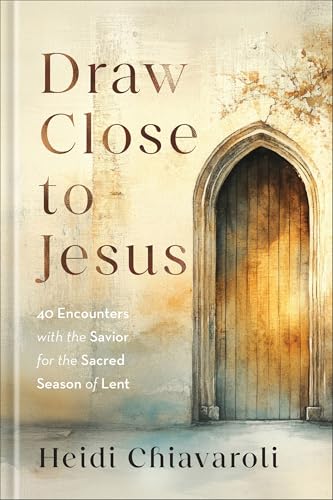
Draw Close to Jesus
by Heidi Chiavaroli
ISBN-13: 9780800746544
Paperback: 256 pages
Publisher: Revell
Released: January 20, 2026
Source: ebook review copy from the publisher through NetGalley.
Book Description, Modified from Goodreads:
It is hard to imagine a more needed and desirable invitation than "come to me, all you who are weary and burdened, and I will give you rest." The Gospel accounts are full of stories of Jesus noticing, meeting, and walking alongside people who were weary, worried, and wondering what to do about the challenges they faced. People a lot like you. Jesus intentionally drew close, spent unhurried time with them, and changed their lives forever.
Through imaginative retellings, Heidi Chiavaroli brings to life the stories of 40 people who encountered him in the pages of Scripture. As you journey alongside them, you will gain new appreciation for the beauty of repentance, the power of redemption, and the incredible intimacy we get to experience with the One who stepped into our sin and shortcomings to offer forgiveness, abundance, and rest for our weary souls.
My Review:
Draw Close to Jesus is a 40 day devotional for Lent built around "imaginative retellings" of people who encountered Jesus in the New Testament. Each day started with the fictional account, written in first person present tense ("I cry"). After this, the author suggested some questions or comments to ponder, followed by a short prayer. She also included the Bible verses that inspired her story.
My main problem was that the author sometimes didn't stick to what's told in the Scriptures. For example, She had Judas leading Roman soldiers to arrest Jesus when the Gospels do not mention Romans, only Jews: "chief priests, the officers of the temple guard, and the elders." She had Jesus leave all but three of his disciples outside of Gethsemane while the Gospels portray them as in the garden with Jesus and Jesus withdrawing 'about a stone’s throw beyond them.' And so on.
The author also sometimes got too imaginative. For example, she described Gethsemane as a garden of fruit trees, with Jesus sitting under a fig tree with pomegranate trees nearby. "Gethsemane" means "an oil press" and is on the Mount of Olives, but she departed from the traditional view that the garden largely held olive trees. Also, she described leprosy as an intensely painful disease where the flesh literally rotted off the body and involved a fever (so an infection) that caused death. This is not what leprosy (now called Hansen's disease) is like.
The author also didn't seem to know some basic facts, like she gave a person "linen robes" and another person a "flax tunic." But linen is cloth made from flax. In another place, she stated that newborn lambs were sacrificed on "its eighth day of life," but (when the age is mentioned), lamb sacrifices were to be one year old. And some things just didn't seem normal for the culture, like she had James think that the smell of Passover lambs roasting over the fire was a "foul odor" when they would have considered it a festive treat.
While some of the stories were well-written and drew out good points, I can't really recommend the devotional due to the amount of creative license the author took.
If you've read this book, what do you think about it? I'd be honored if you wrote your own opinion of the book in the comments.


 Posts
Posts


No comments:
Post a Comment